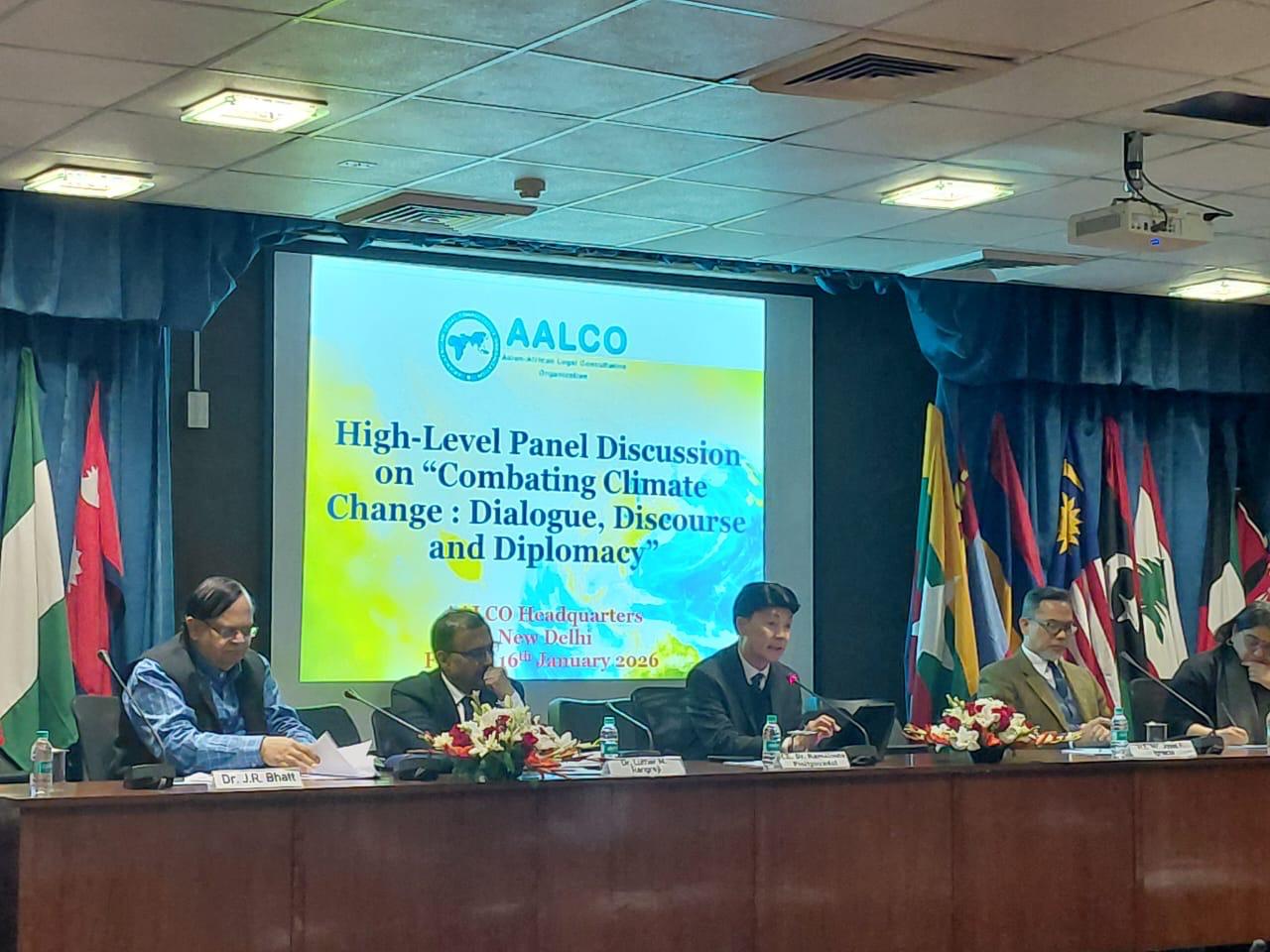
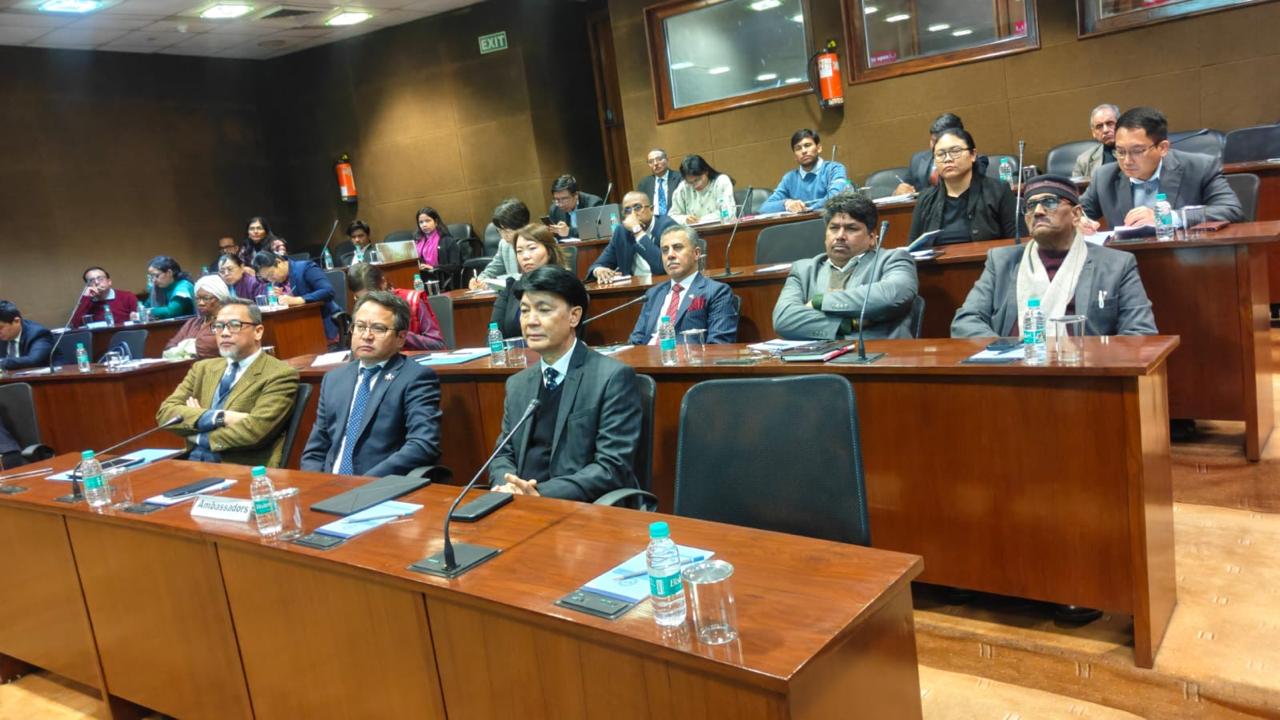
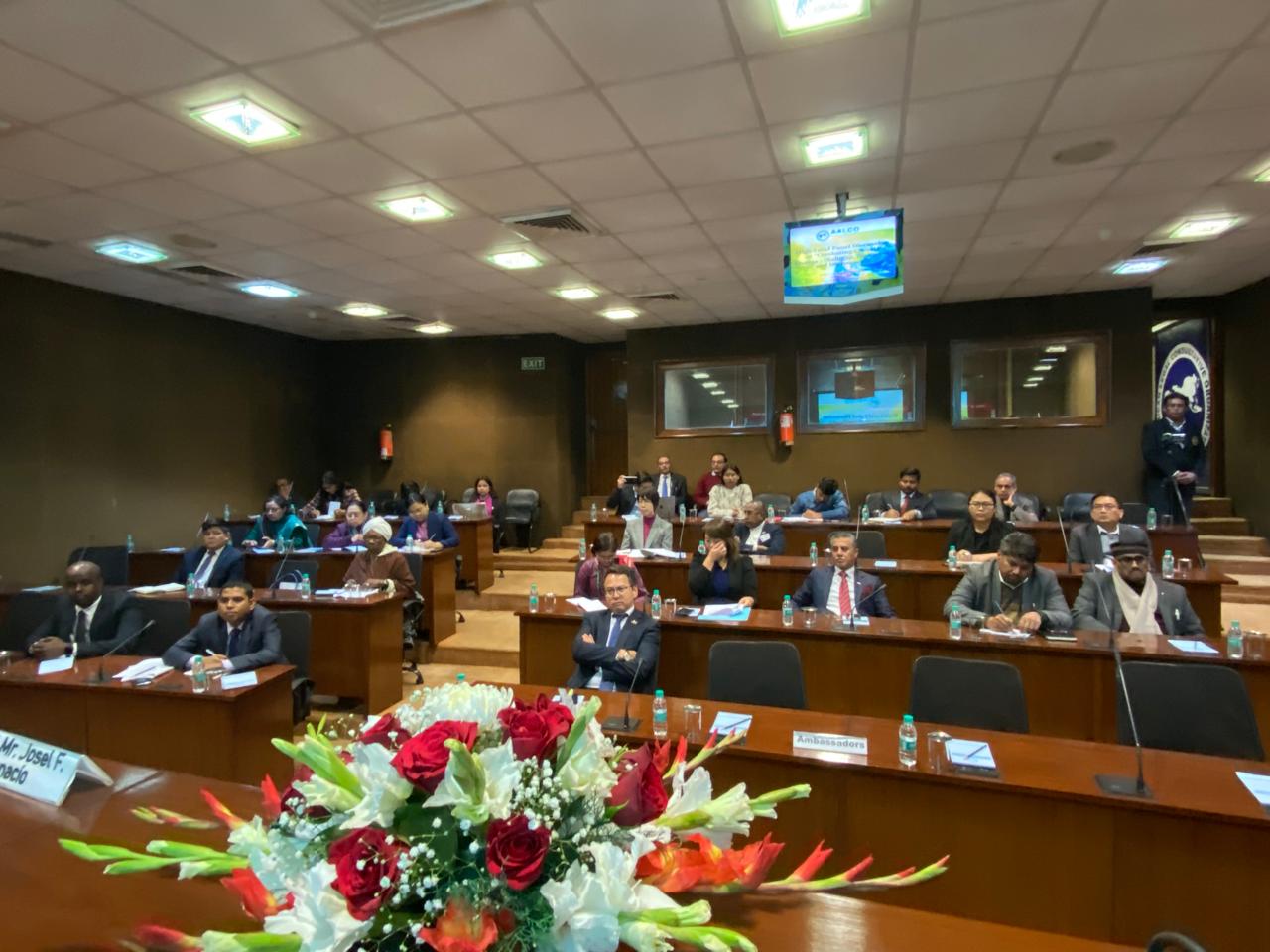
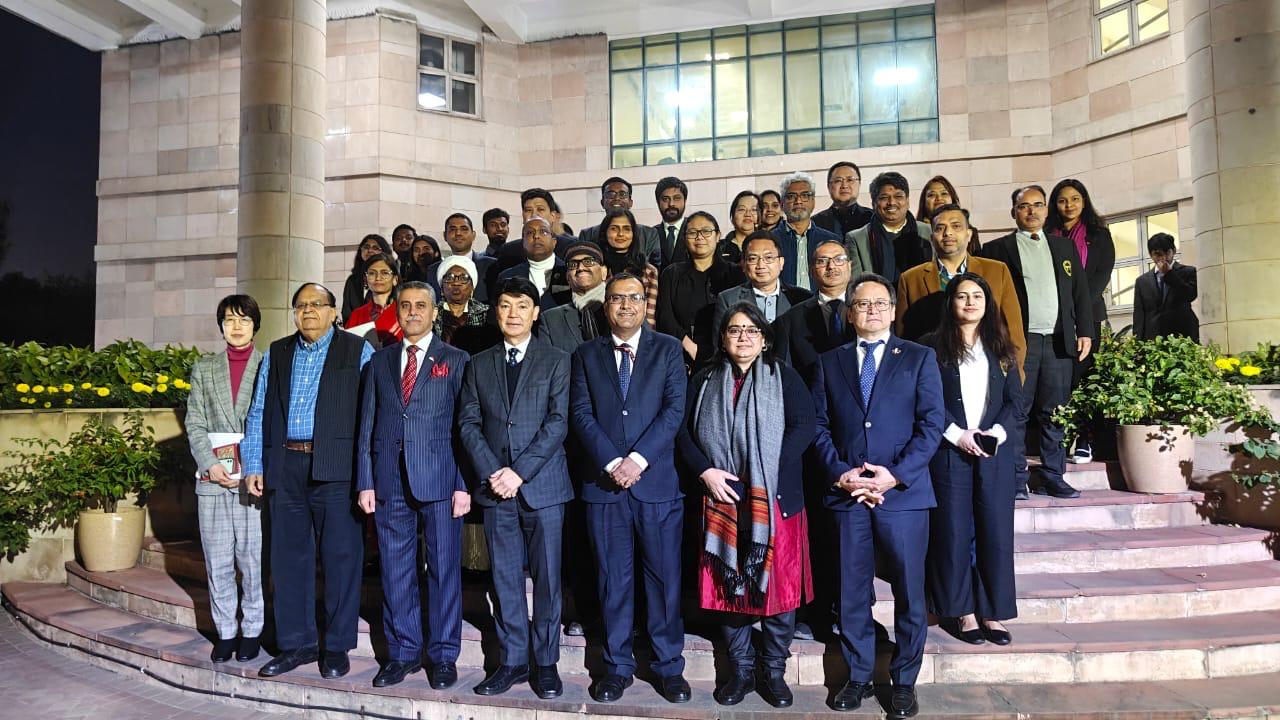
As part of its Platinum Jubilee celebrations marking seventy years since its establishment, the Asian-African Legal Consultative Organization (AALCO) organised a High-Level Panel Discussion entitled “Combating Climate Change: Dialogue, Discourse and Diplomacy” on 16 January 2026 at its Headquarters in New Delhi. The Panel Discussion was the first in a series of events convened to commemorate AALCO’s 70th anniversary.
The event brought together senior government officials, legal experts, academics, and members of the diplomatic community for an informed and substantive exchange on the legal, scientific, and diplomatic dimensions of climate change, with particular emphasis on Asian-African perspectives.
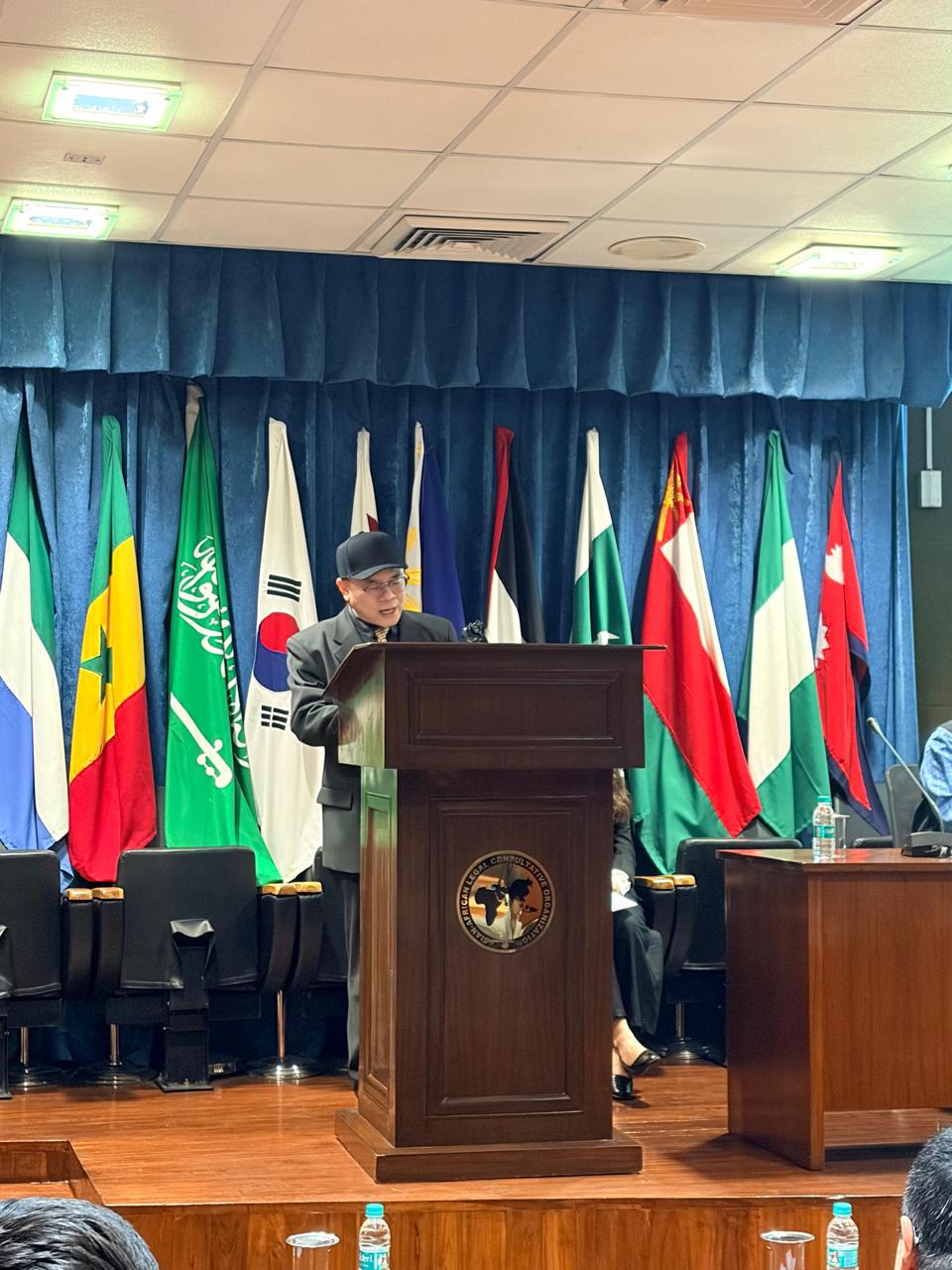
The programme commenced with a Welcome Address by H.E. Dr. Kamalinne Pinitpuvadol, Secretary-General of AALCO, who underscored the growing significance of climate change as a central issue in international law and global governance. The Secretary-General highlighted AALCO’s long-standing engagement with environment and sustainable development and reaffirmed the Organization’s role as a collective platform for advancing the perspectives and concerns of Asian and African States in contemporary international legal discourse.
Opening remarks were delivered by H.E. Mr. Josel F. Ignacio, Ambassador Extraordinary and Plenipotentiary of the Republic of the Philippines to India, on behalf of the Vice-Presidency of the Sixty-Third Annual Session of AALCO. He emphasised the urgency of climate change as a global challenge requiring coordinated and equitable international responses.
The Panel Discussion featured three expert presentations. Dr. Luther M. Rangreji, Additional Secretary and Legal Adviser, Legal & Treaties Division, Ministry of External Affairs, Government of India, examined the legal implications of the Advisory Opinion of the International Court of Justice (ICJ) on Climate Change and its relevance for States, particularly in the context of emerging climate-related litigation. He also situated the Advisory Opinion within the broader framework of the ICJ’s judicial and advisory functions and referred to related developments before the International Tribunal for the Law of the Sea (ITLOS) and the Inter-American Court of Human Rights as part of the evolving international climate jurisprudence.
Dr. J. R. Bhatt, former Adviser to the Ministry of Environment, Forest and Climate Change, Government of India, and currently a Member of the Central Empowered Committee constituted by the Supreme Court of India, addressed the key outcomes of the United Nations Climate Change Conference 2025 (COP30) held in Belém, Brazil. He analysed their implications for developing countries and future climate negotiations, adopting a scientific and data-driven approach that contextualised climate change within its broader socio-economic dimensions, particularly relevant to Asian and African States.
Professor Archna Negi, Professor at the Centre for International Politics, Organisation and Disarmament (CIPOD), School of International Studies, Jawaharlal Nehru University, addressed the evolving nature of climate diplomacy and the complex dynamics shaping international climate negotiations. She highlighted the interlinkages between climate science, climate litigation, and climate diplomacy, and how these increasingly influence contemporary international climate governance.
The presentations were followed by an interactive discussion and question-and-answer session, during which participants engaged with the panellists on issues relating to climate justice, equity, and the role of international law and diplomacy in addressing climate change.
The Panel Discussion underscored the importance of legal clarity, judicial engagement, and sustained diplomacy in responding to climate change. The event concluded with a Vote of Thanks delivered by Deputy Secretary-General Mr. Yong Zhu.